
If your wall is leaning, stones are loose, or the face looks tired, you’re likely weighing retaining wall repair against a full rebuild. In Kelowna, many homeowners choose rock walls because they blend into the Okanagan landscape and often last longer with less drama. Here’s how rock walls can solve common issues—and when a strategic repair is the right call.
Why Rock Walls Work in Kelowna
Kelowna’s slopes, irrigation needs, and seasonal freeze-thaw call for walls that handle movement and moisture. Dry-laid stone (built without mortar) naturally sheds water, flexes slightly, and resists the types of cracks that rigid systems can develop. That means less patching, fewer blowouts, and a more forgiving structure on challenging grades—when the wall is properly built with the right base, batter, and drainage.
Climate, slope, and soil basics
- Freeze-thaw: Water in soils expands and contracts. Walls that can flex a little are less likely to crack.
- Drainage: Irrigation and rain should move through or behind the wall, not get trapped in it.
- Loads: Driveways, patios, and slopes add pressure. Good base prep and stone selection matter.

The 6 Proven Benefits
1) Natural curb appeal that ages well
Rock walls look timeless day one and even better as they patina. Stone colours complement native plants and modern hardscapes. Because the face is dry-laid, repairs can be blended invisibly, keeping the original character without obvious patch lines.
Quick win: Tighten alignment and clean joints during minor repairs to refresh the wall without a full rebuild.
2) Strength with flexibility under load
Dry stone construction relies on gravity, friction, and skilled placement instead of rigid mortar. That gives the structure strength with a touch of flexibility, so the wall can settle slightly without failing. In practice, that can mean fewer cracks and longer service life when base prep and drainage are correct.
What this solves: Small settlements, edge bumps, and seasonal shifts that might otherwise open cracks in a mortared face.
3) Built-in drainage that protects your yard
Because dry-laid walls are permeable, water passes through instead of building pressure. With proper base stone, filter fabric where needed, and a clean gravel backfill, you reduce hydrostatic pressure that can push walls forward. Some mortared walls need weep holes; dry-laid systems often don’t because the whole face “breathes.”
Result: Fewer wet spots, better slope stability, and less frost-jack damage near walkways and patios.
4) Easier, cleaner repairs over time
With dry-laid rock, a skilled crew can unstack a problem area, correct the base or drainage, then restack for a near-invisible fix. That’s ideal when a small section bulges or a few stones shift. You save time and avoid the scars that come with cutting out and re-mortaring large panels.
Good candidates for repair: Localized settling, chipped face stones, minor leaning where base depth and batter can be corrected.
5) Safer solutions near trees and roots
Rigid walls and tree roots often clash. Dry-laid walls allow careful adjustments around root zones and make later tweaks simpler if a root lifts a stone course. The system can flex a little without long cracks traveling across the face.
Pro tip: Keep roots off the base trench. Build around larger roots rather than cutting them whenever possible.
6) Smart lifecycle costs for homeowners
Upfront costs vary by stone type and access. Over the long run, rock walls can reduce call-backs and patching because they manage water and small movements well. With solid base work and drainage, the total cost of ownership stays predictable—and the wall keeps its natural look for decades. (For a homeowner-friendly primer on stone work basics, this Mother Earth News guide is a helpful read.)
https://www.motherearthnews.com/diy/building-a-stone-wall/
When Retaining Wall Repair Makes Sense (vs. Rebuild)
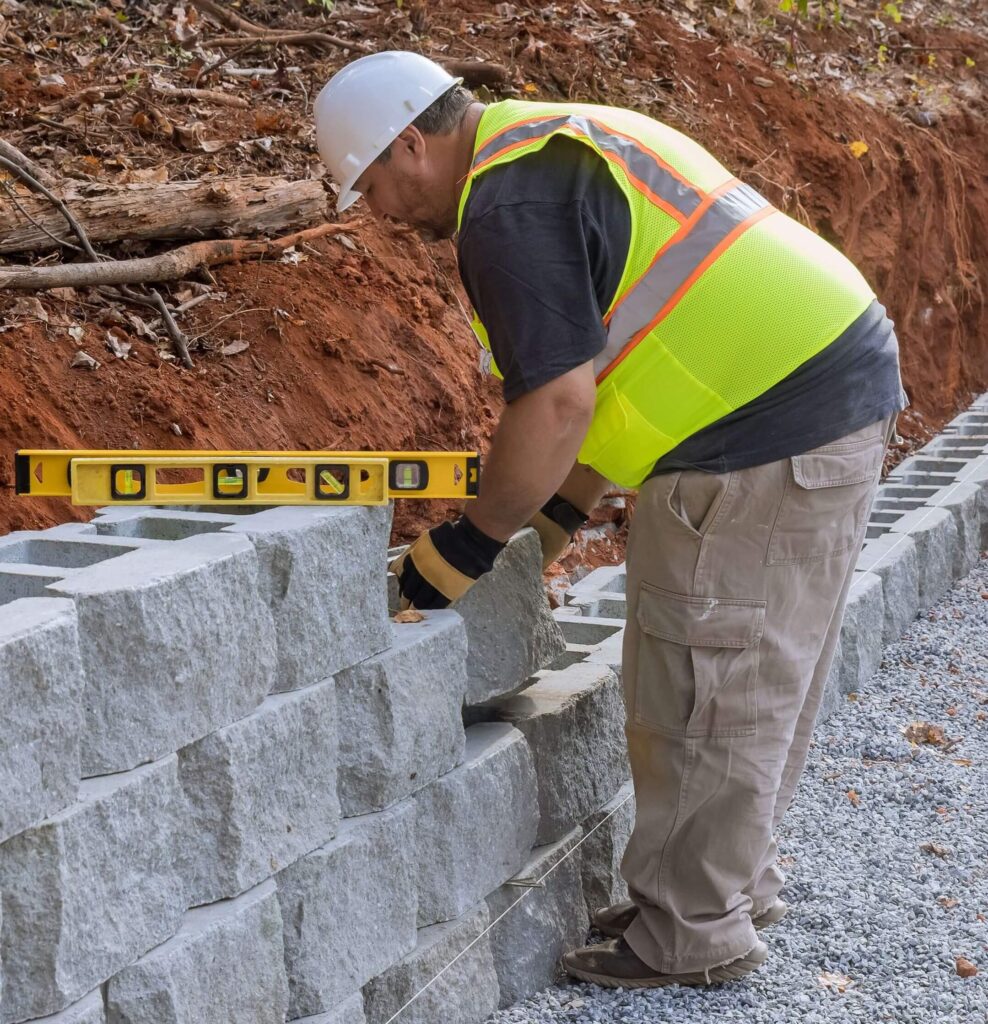
Not every wall needs a reset. Choose repair when:
- The lean is minor and localized.
- The base is close to spec but needs spot-correction.
- One area traps water; drainage can be improved without starting over.
- Face stones are sound; you mainly need alignment and backfill fixes.
Choose rebuild when:
- The wall lacks proper base depth or batter across long runs.
- Large sections have no drainage path.
- Stone sizes or placement can’t support the load.
- You’re adding height or holding back more soil than the original design.
Rule of thumb: A quick inspection can tell you whether a targeted repair will hold. If the design never had a chance, rebuilding the failing section is usually cheaper than repeating repairs.
Kelowna Rules to Know (Heights, tiers, and design)
Local rules help keep walls safe and consistent across neighbourhoods. The City of Kelowna Zoning Bylaw (Section 7) limits a single retaining wall to about 1.2 m. Tiered walls must be spaced horizontally—current guidance references 1.2 m between tiers—and the City outlines when professional design is required. The City’s Section 7 page (updated March 10, 2025) also describes limits on the number of tiers and total height without professional design. Always check the latest wording before you build or modify a wall.
What this means for you:
- Small repairs often proceed without major approvals.
- Bigger changes, added height, or new tiers may require professional design or approvals.
- Setbacks and property lines still apply—survey checks help on tight sites.
Simple Prep Checklist Before We Arrive
Use this to save time and reduce costs:
- Photos: Front, side, and top views of problem areas.
- Measurements: Length, visible height, and approximate thickness of the wall.
- Water paths: Note downspouts, irrigation heads, and wet spots after rain.
- Access: Gate width, slopes, and any low overhead lines or branches.
- Stone match: If you want a seamless repair, share any leftover stone on site.
- Schedule: Tell us if you have upcoming hardscape or planting dates.
Get Rock-Solid Results with Kelstone
Ready to refresh or repair your wall? Book a site visit. We’ll assess structure, drainage, and stone match, then give you a clear scope and quote.
- Learn more about our rock retaining walls → https://kelstonecontracting.com/rock-retaining-walls/
- Request a quote → https://kelstonecontracting.com/contact/
FAQs
How long do rock walls last?
With proper base, batter, and drainage, a dry-laid stone wall can last decades and is less prone to cracking because it flexes slightly.
Do rock walls need weep holes?
Dry-laid walls are naturally permeable, so water escapes through the face and backfill. That lowers pressure behind the wall without adding weep holes in most landscape cases.
What height can I build without engineering?
Kelowna’s rules limit single walls to around 1.2 m, set spacing for tiers, and outline when professional design is required. Always confirm the latest City language or ask us to verify for your address.
Is repairing cheaper than rebuilding?
Often. If the base and drainage are close to spec, a targeted repair costs less than a full teardown. If the wall lacks fundamentals across long runs, rebuilding that section is more reliable.
Can you match my existing stone?
Yes—stone sourcing is part of the plan. We’ll match size, colour, and texture as closely as the supplier network allows.